
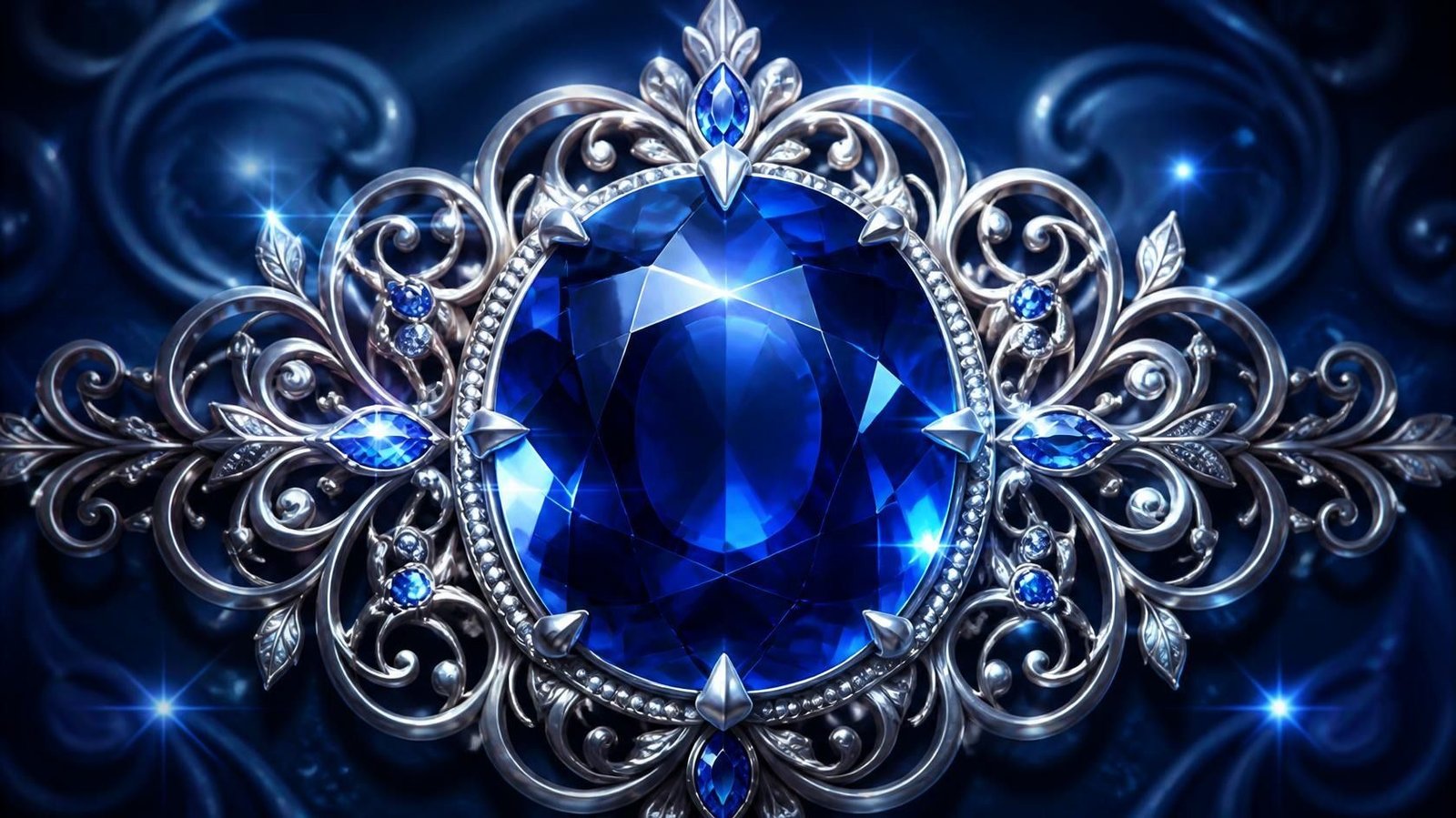

Sapphire is the correct spelling.
Saphire is a common misspelling.
The word needs a double P, and that’s the whole answer.
You’ve probably stared at the word and felt a tiny doubt.
Does it have one P or two?
Maybe you’re typing a gift message, a product listing, or a school essay.
Let’s settle it for good and then dig into the fun stuff behind this gemstone.
Sapphire or Saphire: The Short Answer
The right way to write it is s-a-p-p-h-i-r-e.
Two P’s sit side by side, followed by “hire” at the end.
Dictionaries in the US, UK, Canada and Australia all agree on this.
There’s no British vs American spelling fight here.
Nobody has ever approved “saphire” as a regional variant.
If you see it in print, it’s a typo or a slip.
Spell checkers will flag “saphire” with a red squiggle right away.
That’s your cue to add the missing P.
Quick fix, no drama.
Why So Many People Spell It Wrong
Blame the pronunciation.
Most of us say “SAF-ire,” and that sound has no obvious double P in it.
Your ear says one P while the dictionary says two.
English also loves to hide letters.
Words like “apple,” “happy” and “sapphire” carry doubled consonants that don’t change the sound.
So your brain skips the extra letter, and who can blame it?
Then there’s the “ph” in the middle.
It sounds like an F, which makes “safire” or “saffire” feel just as logical.
Add a double P before it and the word looks busy.
No wonder people trim it down.
Where the Word Sapphire Comes From
The etymology takes us back a long way.
English borrowed the word from Old French “safir,” which came from Latin “sapphirus.”
Latin picked it up from the Greek “sappheiros.”
Here’s a twist you might enjoy.
Some historians think the ancient Greek word first described lapis lazuli, a deep blue stone with golden flecks.
The name may have moved over to the blue corundum we call sapphire today.
Many scholars trace the root even further back to Hebrew “sappir.”
The exact path still gets debated, and that’s okay.
What matters is that the double P and the “ph” came along for the ride.
Both survived centuries of spelling changes.
How to Remember the Double P
Memory tricks work better than rules.
Try one of these the next time you type the word:
- Think of two peas in a pod. Two P’s, always together.
- Split it in half: “sap” plus “phire.” Say it slowly once and it sticks.
- Picture a strong stone. A tough gem earned a tough, doubled letter.
- Remember the shape. The word has 8 letters, and the P’s sit right in the middle.
Here’s a quick story.
Imagine you’re ordering a custom engagement ring online at midnight.
You type “saphire” into the engraving box and almost hit submit.
That tiny missing P could cost you a refund fee and a very awkward conversation.
Pick one trick and say it out loud twice.
It takes ten seconds.
You’ll thank yourself later.
Common Sapphire Misspellings to Watch For
People get creative with this word.
Here are the wrong versions that pop up most often:
- Saphire (the big one, with a single P)
- Safire (spelled the way it sounds)
- Saffire (the F sound gets a double F)
- Sapphyre (an old fashioned flair that isn’t real)
- Sapfire (half right, half wrong)
A small note on “Safire.”
It’s a real surname, as in the late columnist William Safire.
So it’s a legit word, just not the one you want when you mean the blue stone.
Using Sapphire in a Sentence
Seeing a word in action helps it stick.
Here are a few examples you can borrow:
- “She wore a sapphire ring on her right hand.”
- “The lake looked like a sheet of sapphire glass at sunrise.”
- “His car came in a deep sapphire blue finish.”
- “Two sapphires sat in the display case, one cut as an oval.”
Notice the plural.
You just add an S, so it becomes sapphires.
Don’t touch the double P.
You can also use it as a color word.
“Sapphire blue” or “sapphire green” both work.
Lowercase is fine unless it starts a sentence or sits in a brand name.
What Is a Sapphire, Really?
A sapphire is a precious gemstone made of corundum.
Corundum is simply aluminum oxide in crystal form.
Tiny traces of other elements decide the color you see.
In blue sapphires, the color comes mostly from iron and titanium hiding inside the crystal.
Add a different trace element and you get a different shade.
Chemistry is the quiet artist behind every gem.
Sapphire also scores a 9 on the Mohs hardness scale.
Only diamond is harder among common gems.
That’s why sapphire holds up well in everyday jewelry, even on a hand that does dishes and types all day.
Sapphire Colors Beyond Blue
Most people picture blue, and blue is the classic.
Still, sapphire comes in nearly every shade except red.
Gem experts call these other shades fancy sapphires.
Here’s what you might spot at a jewelry counter:
- Pink sapphire for soft, romantic tones
- Yellow sapphire with a sunny glow
- Green sapphire with a calm, earthy feel
- Purple sapphire that looks like grape juice in sunlight
- Padparadscha, a rare pink orange blend named after the Sinhalese word for lotus blossom
Red corundum is a special case.
That one gets its own name: ruby.
We’ll get to that in a minute.
Sapphire as a Birthstone and Anniversary Gem
If you were born in September, sapphire is your birthstone.
It’s been linked with loyalty, wisdom and calm for centuries.
Many people pick it as a thoughtful gift for that reason.
It also marks wedding milestones.
The 45th anniversary is the classic sapphire year, and some modern lists tie it to the 5th anniversary too.
Either way, it’s a gift with real weight behind it.
Here’s a tip if you’re shopping for a September birthday.
Write the card carefully.
A card that says “happy saphire birthday” would be pretty hard to live down.
Famous Sapphires Worth Knowing
Sapphire jewelry has a long royal résumé.
The best known modern example is the engagement ring once worn by Princess Diana.
It features a large oval Ceylon sapphire surrounded by diamonds, and Kate Middleton wears it today.
That ring did something big for the stone.
It pushed sapphire engagement rings back into the spotlight.
Jewelers around the world saw demand jump.
Great sapphires often come with a place name attached.
Kashmir, Burma and Ceylon (now Sri Lanka) are the legends in the trade.
Buyers pay a premium for stones from these origins, so a lab report matters.
Sapphire vs Ruby: Same Stone, Different Name
Here’s a fact that surprises people.
Ruby and sapphire are the same mineral.
Both are corundum.
The difference comes down to color and one trace element.
Chromium gives ruby its red.
Without that red, the stone gets called a sapphire, whatever the shade.
Why does this matter for spelling?
Because you’ll see both words in the same jewelry descriptions.
Knowing they’re relatives helps you keep each one straight.
How to Spot a Real Sapphire When Shopping
Real sapphire is pricey, so a little homework pays off.
Always ask for a gemological certificate from a trusted lab.
It should name the stone, its origin and any treatments.
Many sapphires are heat treated to boost color, and that’s normal in the trade.
What matters is that the seller tells you.
Honest sellers always do.
Watch for these red flags:
- A price that seems far too good to be true
- No lab report or vague paperwork
- A seller who can’t explain the stone’s origin
- Listings that misspell the word, like “saphire” (sloppy listings sometimes signal sloppy sourcing)
That last one isn’t a rule.
It’s just a gut check worth keeping.
Lab Grown Sapphires and Sapphire Crystal
Not every sapphire comes out of the ground.
Scientists learned to grow synthetic sapphire in the early 1900s, and the process has only improved.
A lab grown sapphire has the same chemistry and hardness as a mined one.
This also explains why you’ve heard about sapphire crystal.
Watchmakers use it for scratch resistant watch glass.
Some phone makers use it to cover camera lenses.
So the word shows up in tech as often as in jewelry.
That’s one more reason to spell it right.
Product pages, spec sheets and reviews all depend on it.
Sapphire as a Name, a Color and a Brand
People love the word as a name.
Sapphire is a given name for girls, and you’ll find it on cafés, salons and boutiques too.
When you register a business or name a baby, double check that second P.
It also works as a color name in fashion and design.
“Sapphire blue” shows up on paint chips, dresses and car brochures.
It signals a deep, rich blue with a touch of royalty.
One more small point on style.
Capitalize it only when it’s a proper name, like a person or a company.
For the stone or color, keep it lowercase.
Quick Comparison: Correct vs Incorrect
Here’s a simple table for fast skimming:
| Spelling | Correct? | Note |
| Sapphire | Yes | Standard in all English dialects |
| Sapphires | Yes | Normal plural |
| Saphire | No | Missing the second P |
| Safire | No | Real surname, wrong word here |
| Saffire | No | Spelled by sound |
| Sapphyre | No | Invented variation |
Screenshot it if you like.
It’s a handy cheat sheet for writers and online sellers.
Frequently Asked Questions
Is it sapphire or saphire?
It’s sapphire, with two P’s.
“Saphire” is always a misspelling.
Is sapphire spelled differently in British English?
No.
British and American English share the same correct spelling.
How do you pronounce sapphire?
Most people say “SAF-ire.”
Some say “SAF-eye-er,” and both are fine.
What month is the sapphire birthstone?
September.
It’s also tied to the 45th wedding anniversary.
Are sapphires only blue?
Not at all.
They come in pink, yellow, green, purple and more.
Final Thoughts: Two P’s and You’re Set
Here’s the takeaway.
Sapphire has a double P, and “saphire” is a slip.
Pick a memory trick, and you’ll never second guess it again.
The word has a rich story behind it, from ancient Greek to royal rings to the glass on your watch.
That story is worth remembering, and so is the spelling.
Get one right and the other feels natural.

