
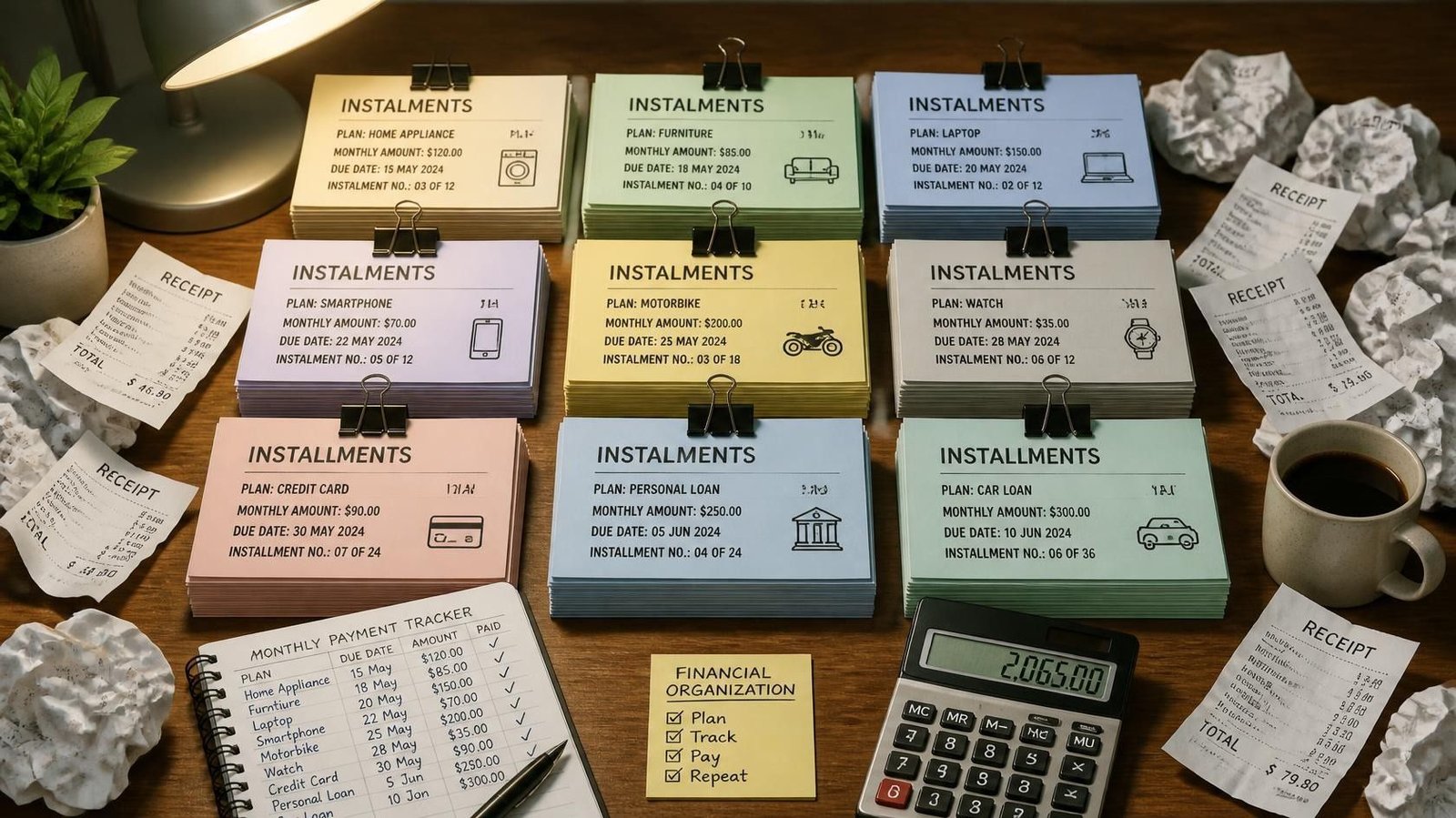

Ever typed “monthly installments” and then doubted yourself?
Or maybe you spotted “instalments” on a UK invoice and thought someone made a typo.
Here’s the short answer.
Both spellings are correct.
Installment is the American English spelling, and instalment is the British English spelling.
They mean the exact same thing.
So the only real question is who you’re writing for.
Let’s sort it out with simple rules and real examples.
Core Meaning and Spelling Clarity
Before comparing spellings, let’s lock down the meaning.
It’s simpler than most people expect.
Simple Definition
An instalment (or installment) is one part of a bigger amount that you pay over time.
Buy a phone for 600, pay 50 a month, and each 50 is one instalment.
The word also describes one part of a series.
A new episode of your favorite show is the latest installment.
Main Difference
The difference is a single letter.
Americans write installment with a double L, while British writers write instalment with one L.
Meaning, pronunciation, and use all stay the same.
The plurals follow the same split: installments in the US and instalments in the UK.
Why People Get Confused
The trouble starts with the verb “install.”
It keeps both L’s in every country, so your brain expects the noun to do the same.
British English breaks that pattern, and that’s what trips people up.
Spell checkers make it worse because they flag whichever form doesn’t match their language setting.
Real-Life Example
Picture a shopper in Texas ordering a sofa from a UK furniture site.
Checkout says “Pay in three instalments,” and she wonders if the site made a mistake.
It didn’t.
The store follows British spelling conventions, and her browser follows American ones.
Real-Life Meaning Explained
You meet this word more often than you’d guess.
It pops up anywhere a payment plan splits a big cost into smaller chunks.
Everyday Examples
Here are the four places most people run into it.
Shopping
Online stores love flexible payment options.
A jacket costing 400 becomes four equal payments of 100, often sold as interest-free installments.
Education
Schools and colleges often let families split tuition fees into parts.
A parent might pay the first installment in August and the next one by the due date each term.
Loans
A loan gets repaid through fixed monthly payments.
Each one covers part of the borrowed amount plus interest, and car loan payments work exactly this way.
Insurance
Many insurers let you split the yearly premium.
Instead of one big insurance payment, you send smaller monthly instalments all year.
Side-by-Side Comparison Table
Sometimes a quick table beats a long explanation.
Here’s how the two spellings stack up.
| Feature | Instalment | Installment |
| English type | British English | American English |
| Letter L | Single L | Double L |
| Plural | Instalments | Installments |
| Common in | UK, Ireland, Australia, India | United States |
| Example | Pay in monthly instalments | Pay in monthly installments |
| Meaning | Part of a payment or series | Part of a payment or series |
Notice how only the spelling changes.
If you remember this table, you can skip the dictionary next time.
The History Behind the Spellings
The word traces back to an old French term about fixing something in place.
That idea fits well, since an instalment is a payment fixed for a set date.
Over time, English split into regional spelling variations.
Both forms survived because each region kept its own habit.
British English Preference
British writers tend to trim a letter before “ment.”
That’s why you also see enrolment and fulfilment in UK writing.
So instalment isn’t a random exception.
It follows a pattern British English has used for ages.
American English Preference
American writers usually keep the double L.
That makes the noun mirror the verb “install,” just like enrollment and fulfillment.
It feels logical, and that’s a big reason it stuck.
Most US dictionaries list installment as the main spelling.
Common Mistakes People Make
Most slip-ups here come from habit, not ignorance.
Let’s look at the three that show up most.
Mistake #1: Mixing Both Styles
This one sneaks into emails all the time.
“Pay in three instalments, and the first installment is due Friday” uses both spellings in one sentence.
The fix is easy.
Pick one form and stick with it for the whole document.
Mistake #2: Thinking One Version Is Wrong
Plenty of people see a red squiggle and assume they made an error.
Often, the squiggle just means your language setting doesn’t match the spelling.
Neither version is wrong.
Check your setting before you “fix” anything.
Mistake #3: Using the Wrong Regional Style
Imagine sending “installments” to a bank client in London.
Or “instalments” to a school in Chicago.
Nobody will panic, but it can look careless.
Matching your reader’s English shows you paid attention.
Incorrect vs Correct Examples
Seeing the fix beats reading about it.
Here are a few quick before and after lines.
- Incorrect: The loan has six instalments, and each installment is due monthly.
- Correct (UK): The loan has six instalments, and each instalment is due monthly.
- Incorrect: We’ll send the second instalment to our New York client.
- Correct (US): We’ll send the second installment to our New York client.
- Incorrect: Your intallment is due soon.
- Correct: Your installment is due soon.
- Incorrect: Please pay the instalement by Friday.
- Correct: Please pay the instalment by Friday.
The last two are plain spelling mistakes, not regional ones.
Watch for missing letters in “install” and extra letters in “instalment.”
Professional Writing Importance
Spelling might feel small.
Yet in professional writing, small things shape trust.
In Business
Invoices, financial contracts, and bank documents all need one clear style.
Match the region of your client, and keep it the same across every page.
A contract that flips between spellings looks sloppy.
That’s not the vibe you want when money’s involved.
In Academic Writing
Most schools and journals ask for one English style.
Check your academic writing guidelines before you submit anything.
A UK university will expect instalment.
A US journal will expect installment, so follow the rulebook.
In Freelancing and Content Writing
Clients rarely say which English they want.
So ask early, because it saves you edits later.
Strong freelance content writing means writing for the reader, not for your own habit.
Set your editor’s language to match before you type a word.
Practical Examples in Daily Communication
Let’s see how this looks in real messages.
You can borrow these lines and adjust them.
Example 1: Online Shopping
UK version: “Split your order into four interest-free instalments at checkout.”
US version: “Split your order into four interest-free installments at checkout.”
Same offer, same meaning.
Only the spelling shifts to suit the shopper.
Example 2: Banking Email
UK version: “Your next instalment of 250 is due on 5 November.”
US version: “Your next installment of 250 is due on November 5.”
Notice the date order changes too.
Regional habits often travel together.
Example 3: School Fees
“The second installment of the term fee is due Friday.”
In a UK school, that same line would say instalment.
Parents care about the amount and the date.
Still, correct spelling makes the notice look polished.
Mini Case Study: A Freelance Writer’s Mistake
Here’s a scenario many freelancers will recognize.
Sara writes a blog post for a US fintech startup, and she types “instalments” all through it.
Her editor flags every single one.
Sara thought she was being extra careful, but she’d used British spelling for an American audience.
Next month, she lands a UK client and switches to installment out of habit.
Same problem, opposite direction.
Now she asks every new client one question upfront: “US or UK English?”
This is an illustrative example, not a real client story.
Still, it shows how easy the slip is, even for careful writers.
Memory Tricks to Remember the Difference
You don’t need fancy rules.
A few simple tricks do the job.
Trick #1: Think About Geography
Try this line: Americans install the whole word, so they keep both L’s.
Brits trim it down, so they keep one.
It’s a silly picture.
That’s exactly why it sticks.
Trick #2: Remember the Double “L”
Look at the verb “install” first.
It always has a double L, and the American noun copies it.
If you see installment, think US.
If you see one L, think UK.
Trick #3: Match the Rest of Your Writing
Check your other spellings.
If you write “colour” and “organise,” use instalment.
If you write “color” and “organize,” use installment.
Your spelling should tell one story from start to finish.
Quick Fix Guide
Already wrote the whole piece and spotted a mismatch?
Don’t panic, because the repair takes about two minutes.
- Decide who your reader is: US, UK, or somewhere else.
- Set your spell checker to English (US) or English (UK).
- Use Find and Replace to swap “installment” with “instalment,” or the other way around.
- Skim the result once, so the verb “install” stays untouched.
- Check your headings, image captions, and page title too.
Step 4 matters more than it looks.
A careless replace can turn “install” into a mess.
Related Terms You Should Know
A few neighbors of this word pop up in the same conversations.
Knowing them makes your writing sharper.
- Deposit: the first payment you make toward a purchase.
- Payment schedule: the plan that lists every amount and date.
- Partial payments: smaller payments that add up to the full price.
- Scheduled payments: payments set to leave your account on fixed dates.
- Hire purchase: a UK term for paying over time before you own the item.
- Layaway: a US term for paying in parts before you take the item home.
- EMI: short for equated monthly instalment (or installment), common in India.
- Enrol / Enroll: another pair that follows the same British and American split.
Does It Matter for a Global Audience?
Plenty of readers don’t live in the US or the UK.
If your site serves people worldwide, you’re writing international English.
Many Commonwealth English regions lean British, and Canadian writers often do too.
When your audience is mixed, choose one style and keep your spelling consistency tight.
Tips for Students and Writers
Good habits beat memorizing rules.
These three will cover most situations.
Use One English Style
Pick a style before you start writing.
Then stay with it from the first line to the last.
Check Your Audience
Ask yourself who’s reading.
A US school, a UK bank, and a global blog all call for different choices.
Use Spell Check Carefully
Spell checkers are helpful, but they aren’t mind readers.
They only know the language you set, so confirm it first.
FAQs About Instalments or Installments
Is “instalments” correct spelling?
Yes, it’s the standard spelling in British English.
You’ll see it across the UK, Ireland, Australia, and India.
Is “installments” an American spelling?
Yes, installments is the standard form in American English.
It keeps the double L from the verb “install.”
Do both words mean the same thing?
Yes, they carry the same meaning.
Each one means a part of a payment or a part of a series.
Which spelling should students use?
Follow your school’s style guide first.
If there isn’t one, match the English variety your teacher uses.
Can I use both spellings in one article?
You shouldn’t.
Mixing them makes your writing look inconsistent, so pick one.
Why does British English use “instalments”?
British spelling often drops a letter before “ment,” as in enrolment and fulfilment.
Instalment follows the same pattern.
Which spelling is better for SEO?
Neither wins on its own.
Use the form your readers actually type, and mention the other variant once if your audience is mixed.
Final Thoughts
So, instalments or installments?
Both are right, and your reader decides which one fits.
Write installment for a US audience and instalment for a UK or Commonwealth one.
Whatever you pick, stay consistent.

